
Childcare Worker Training South Africa: What You Need to Know
Working with young children can lead to a meaningful career in Early Childhood Development (ECD), but choosing the correct qualification is an important first step.
For South Africans interested in childcare, ECD training can provide knowledge and practical skills for supporting children’s development in ECD centres, community programmes and other childcare environments.
Government education information identifies several ECD qualification pathways, while HWSETA also lists qualifications connected to child and youth care work. It is important, however, to distinguish Early Childhood Development from Child and Youth Care Work, because these are related but different fields.
This guide explains the main routes prospective childcare and ECD workers can investigate in 2026.
What Does a Childcare Worker Do?
Childcare and ECD work involves much more than supervising children.
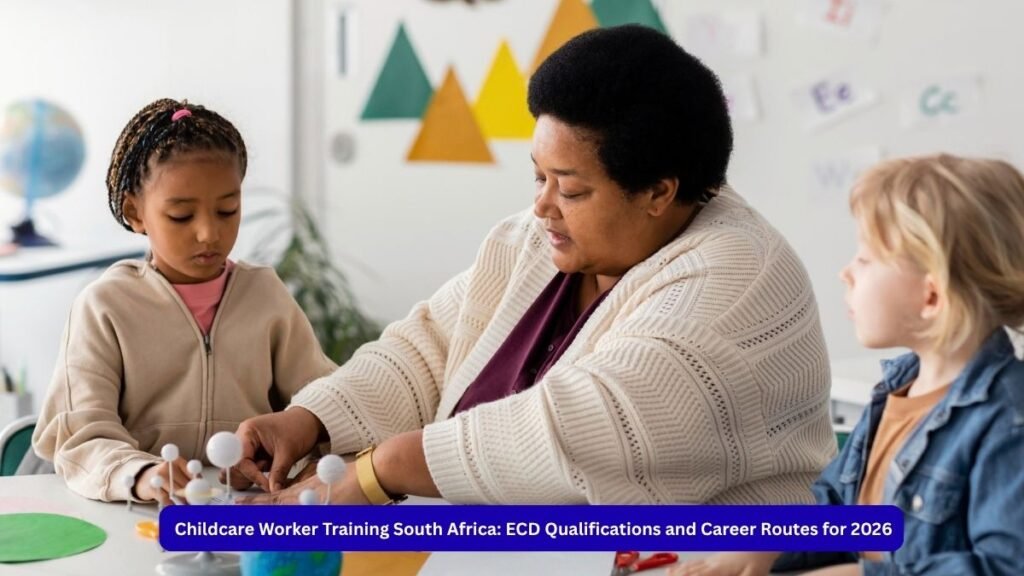
An ECD practitioner may help young children develop socially, emotionally, physically and cognitively. Duties can include organising age-appropriate activities, communicating with children, maintaining a safe environment, supporting learning through play and working with families and other professionals.
South African ECD guidance emphasises the importance of creating safe, supportive learning environments and responding to children’s developmental needs.
Potential workplaces include:
- ECD centres
- Preschools
- Community-based programmes
- Daycare environments
- Childcare facilities
- Home-based childcare settings
- Organisations providing child and youth services
The exact role and employment requirements depend on the employer, programme and qualification involved.
Why Childcare Worker Training South Africa Matters in 2026
Early Childhood Development remains an important part of South Africa’s education and social-development priorities.
This makes recognised training particularly important for people who want to establish themselves in the sector.
Training can help learners understand:
- Child growth and development
- Learning through play
- Communication with young children
- Inclusive learning practices
- Health and safety
- Observation and assessment
- Planning age-appropriate activities
- Working with families and communities
Childcare Worker Training South Africa: Main ECD Qualification Routes
There is no single qualification that applies to every childcare-related job. Your best route depends on your existing education, the type of work you want to perform and the current requirements of the institution or employer.
1. Further Education and Training Certificate in ECD
The Further Education and Training Certificate: Early Childhood Development is an NQF Level 4 qualification historically associated with SAQA ID 58761.
SAQA describes it as an entry-level qualification for people entering the Education, Training and Development field, specifically Early Childhood Development. The qualification was designed to equip learners to facilitate the overall development of young children in different settings.
An important 2026 consideration is that SAQA records the qualification as having passed its end date, with a last date for enrolment of 30 June 2026 and a last date for achievement of 30 June 2029. Therefore, applicants should verify the current registration and replacement qualification before enrolling.
2. Higher Certificate in Early Childhood Development
A Higher Certificate in ECD is an NQF Level 5 route referenced in South African ECD qualification frameworks.
Government ECD education material describes higher-level ECD study as providing learners with introductory knowledge, conceptual tools and practical techniques that can support progression into further ECD education.
Entry requirements depend on the institution and the specific qualification currently being offered.
3. Diploma-Level ECD Study
Diploma-level study provides a further progression route for people who want to develop more advanced professional knowledge in ECD.
The Department of Higher Education and Training’s ECD progression framework identifies diploma and degree pathways within Early Childhood Education and Care, including progression toward higher-level professional qualifications.
Applicants should check the institution’s current admission requirements before applying because qualification structures and registration arrangements can change.
4. Child and Youth Care Work
Child and Youth Care Work is another relevant career route, but it should not automatically be treated as the same qualification as ECD.
HWSETA currently lists an Occupational Certificate: Child and Youth Care Worker at NQF Level 5, as well as a Further Education and Training Certificate in Child and Youth Care at NQF Level 4 among its registered learnerships.
HWSETA also reports work involving Recognition of Prior Learning (RPL), including pathways that have enabled experienced caregivers to obtain formal child and youth care qualifications.
Childcare Worker Training South Africa: Entry Requirements
Entry requirements vary according to the qualification and institution.
For example, Department of Education material identifies Grade 9 as the minimum admission requirement for the historical Level 4 FET Certificate in ECD, while higher certificate-level study can require a National Senior Certificate, Senior Certificate, NASCA, Level 4 NC(V) or an appropriate Level 4 ECD certificate.
Before applying, check:
- The qualification’s current registration status.
- The institution’s admission requirements.
- Whether the provider is appropriately accredited.
- Whether workplace learning is included.
- Whether the qualification matches the childcare role you want.
How to Choose an ECD Training Provider
Choosing the provider is just as important as choosing the qualification.
HWSETA specifically warns prospective learners about unaccredited institutions that advertise qualifications as accredited. It advises learners to verify accreditation rather than relying solely on logos or claims in advertisements.
HWSETA’s training-provider resources also provide information about accredited skills development providers.
Before paying tuition or submitting documents, verify the provider and qualification through the relevant official quality-assurance body.
Childcare Worker Training South Africa: Practical Experience
Theory is only one part of preparing for childcare work.
Practical exposure can help learners understand how to:
- Interact appropriately with young children
- Organise learning activities
- Maintain safe environments
- Observe children’s development
- Communicate with parents and caregivers
- Follow daily routines
- Support children with different needs
Where a programme includes workplace learning, learners should take the practical component seriously and keep evidence of completed training or workplace experience.
Documents to Prepare Before Applying
Having your documents ready can make applications easier and reduce delays.
Before applying, make sure you:
- Update your CV.
- Ensure your contact details are correct.
- Upload clear certified documents if requested.
- Double-check your academic information.
- Apply well before the closing date.
- Keep copies of your application confirmation.
- Submitting an incomplete application may reduce your chances of being shortlisted.
You may also need identification documents, school certificates, academic records, proof of residence or other documents depending on the institution or programme.
Be Careful With Unaccredited ECD Programmes
One of the most important lessons for prospective childcare workers is to verify accreditation before enrolling.
HWSETA has publicly cautioned learners against private institutions that claim to offer accredited qualifications without proper accreditation. The organisation recommends confirming accreditation through the relevant authority before enrolling.
This is particularly important when advertisements promise fast qualifications, guaranteed employment or unusually low-cost courses.
Do not assume that a training provider is accredited simply because its website displays the logo of a SETA or government organisation.
What Should You Do Next?
If you want to build a career working with children in South Africa, start by identifying the specific occupation you want.
If your goal is ECD, investigate recognised ECD qualifications and current provider requirements. If your interest is child and youth care, research the relevant HWSETA/QCTO pathway.
You should also:
- Compare admission requirements.
- Verify qualification registration.
- Confirm provider accreditation.
- Ask whether practical training is included.
- Prepare your CV and supporting documents.
- Monitor official education and SETA announcements.
- Keep copies of applications and correspondence.
For ECD programme registration, the Department of Basic Education’s Bana Pele ECD Registration Drive provides official information and states that ECD programme registration is free.
Career Progression After ECD Training
ECD training can form part of a longer professional development journey.
Depending on your qualification, experience and career goals, you may progress toward additional ECD qualifications or related education and child-development roles.
South Africa’s ECD policy framework has also emphasised articulation between Level 4 and Level 5 qualifications and progression toward higher-level ECD education.
The important point is to treat your first qualification as part of a career pathway rather than assuming that one short course automatically qualifies you for every childcare position.
Frequently Asked Questions
1. Do I need a qualification to work with children?
Requirements vary by role and employer. Formal ECD or child-and-youth-care qualifications can provide recognised training, while some positions may have additional requirements.
2. Can I study ECD without Matric?
Some entry-level ECD routes have historically accepted learners from Grade 9, while higher-level qualifications generally have higher admission requirements. Always confirm the current requirements with the provider.
3. Is ECD the same as Child and Youth Care Work?
No. They are related areas involving children and young people, but they are distinct fields with different qualifications and occupational pathways. HWSETA lists Child and Youth Care Worker qualifications separately from ECD qualifications.
4. What NQF level is the ECD FET Certificate?
The historical Further Education and Training Certificate: Early Childhood Development, SAQA ID 58761, is an NQF Level 4 qualification.
5. How can I avoid fake ECD training providers?
Check the qualification’s registration status and verify the provider’s accreditation with the relevant quality-assurance body before paying fees or enrolling. HWSETA specifically warns learners about unaccredited providers.
6. Where can I find official information about ECD?
Start with official South African government, SAQA, DHET, Department of Basic Education and relevant SETA resources. Avoid relying exclusively on social-media advertisements or unofficial recruitment websites.
Conclusion
A career working with children requires more than an interest in childcare. The right training can provide the knowledge, practical skills and recognised credentials needed to progress in the ECD or child-and-youth-care sector.
For 2026, prospective learners should pay particular attention to the current status of qualifications, because some older ECD qualifications have passed registration end dates while replacement and newer occupational pathways continue to develop.
Most importantly, verify your qualification and training provider before enrolling, prepare your documents carefully and choose a pathway that matches your education and long-term career goals.