
Did Someone Get a Loan With Your ID? Check These Warning Signs First
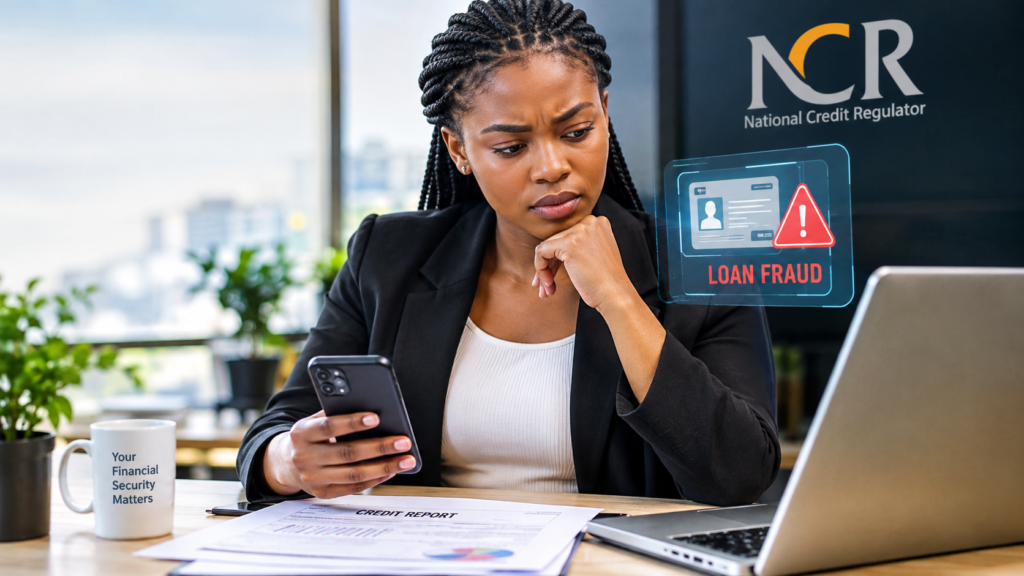
One unexpected debt collector call can be enough to raise serious questions about your financial identity. If a loan, retail account, cellphone contract or other credit agreement appears in your name even though you never applied for it, your personal information may have been misused.
Identity fraud can have serious consequences. A fraudulent account may affect your credit profile, trigger collection activity and make it more difficult to obtain legitimate credit.
The good news is that consumers are not powerless. If you discover an account you do not recognise, the most important steps are to act quickly, obtain evidence, notify the relevant credit provider, dispute inaccurate information with the credit bureau and report suspected identity fraud.
The Southern African Fraud Prevention Service (SAFPS) specifically advises consumers who suspect impersonation to contact the credit provider or debt collector involved and report the fraud to the South African Police Service (SAPS).
Loan Fraud With Your ID: What Does It Mean?
Loan fraud with your ID happens when another person uses your personal information to apply for or obtain credit without your permission.
Criminals may obtain information such as an ID number, copy of an identity document, proof of address, cellphone number or other personal details and use it during a fraudulent application.
Depending on the circumstances, fraudulent applications may involve:
- Personal loans
- Retail or store accounts
- Furniture accounts
- Cellphone contracts
- Online credit accounts
- Short-term loans
- Other credit facilities
A victim may not immediately know that an account has been opened. In some cases, the problem only becomes apparent when a debt collector contacts the person, an unfamiliar account appears on a credit report or a legitimate credit application is declined.
Loan Fraud With Your ID: Warning Signs to Watch
There are several warning signs that should prompt you to investigate your credit profile.
These include:
- A debt collector contacts you about an account you never opened.
- You receive SMSes, emails or letters concerning unfamiliar credit.
- Your credit report lists a lender you do not recognise.
- An unfamiliar loan or retail account appears on your profile.
- Your credit report contains an unknown address or telephone number.
- You receive statements from a company you have never dealt with.
- You are unexpectedly declined for credit.
- An account shows arrears or a default that you do not recognise.
- Your lost or stolen identity document may have been used by another person.
Do not dismiss an unfamiliar address, telephone number or email address as a minor error. Such information may help establish that an application was not made by you.
How to Check if a Loan Was Taken Out in Your Name
Your credit report is one of the most useful places to begin an investigation.
A credit report can help you identify accounts and credit providers associated with your identity. The National Credit Regulator encourages consumers to check their credit reports regularly because this can help identify incorrect or potentially fraudulent information.
The NCR maintains a register of credit bureaus, including registered providers such as Experian South Africa.
When checking your report, look beyond your credit score. Carefully review:
- Every listed loan account
- Retail and store accounts
- Credit providers you do not recognise
- Account opening dates
- Outstanding balances
- Payment information
- Unknown addresses
- Unknown cellphone numbers
- Defaults and arrears
- Judgments or other listings you do not recognise
If you find something suspicious, save a copy of the report and record the account number, lender, date opened, balance and any reference numbers.
What Should You Do After Finding a Fraudulent Loan?
Start by contacting the credit provider shown on your credit report.
Explain clearly that you did not apply for or enter into the agreement and that you believe the account may have resulted from identity fraud.
Ask the provider to investigate and request information that can help establish how the application was made. Depending on the circumstances, this may include:
- The alleged loan agreement
- Application information
- The identification document used
- Contact details supplied during the application
- Bank account details used for payment
- The cellphone number used
- The email address used
- Verification information
- Online application information, where applicable
- Relevant call recordings, where applicable
Ask for written confirmation that your fraud complaint has been logged and obtain a complaint or reference number.
Importantly, do not simply acknowledge that you owe a debt when you are disputing that you ever opened the account. Keep your communication factual and clearly state that you are investigating suspected identity fraud.
How to Dispute Fraudulent Information With a Credit Bureau
South African consumers have the right to challenge inaccurate information held by credit bureaus. The NCR’s current guidance states that disputed information can include information that is factually incorrect or related to fraud.
Once you identify the bureau carrying the disputed account, submit a formal dispute and provide the supporting information requested.
Your dispute should explain:
“I dispute this account as fraudulent. I did not apply for this credit agreement and did not receive or benefit from the funds. Please investigate the information and correct or remove it if it cannot be verified as mine.”
Supporting documents may include:
- A copy of your ID
- The relevant credit report
- The lender’s correspondence
- Your fraud complaint reference
- SAPS documentation where available
- Evidence showing that the contact details or banking information used do not belong to you
Under NCR guidance, a registered credit bureau must investigate a complete dispute within 20 business days. If credible evidence supporting the information cannot be obtained, the disputed information must be corrected or removed.
If the dispute is not resolved satisfactorily, consumers may escalate the matter to the NCR using the applicable complaint process.
Should You Report Identity Fraud to SAPS?
Yes. If you believe someone used your identity to obtain credit without your permission, you should report the suspected fraud to the South African Police Service.
Take relevant documentation with you, such as:
- Your identification document
- A copy of your credit report
- Correspondence from the lender
- Debt collection messages
- Details of the suspicious account
- Evidence concerning a lost or stolen ID, where applicable
- A written explanation of what happened
Keep the police case information and any reference number provided to you. You may need it when dealing with the lender, credit bureau or other organisations.
SAFPS also advises victims of impersonation to report the matter to SAPS as part of the fraud-reporting process.
How SAFPS Can Help Protect Your Identity
The Southern African Fraud Prevention Service provides fraud-prevention services to consumers, including Protective Registration for people whose identities have been compromised.
SAFPS says Protective Registration can be used where an ID or passport has been lost or stolen or where someone has been a victim of impersonation. The service is designed to alert participating organisations to take additional care when verifying applications made using the affected identity.
SAFPS states that Protective Registration is free to consumers.
If your identity has been compromised, using official SAFPS channels rather than unofficial intermediaries is important.
What If the Credit Provider Says You Still Owe the Money?
Do not ignore the dispute simply because the credit provider says the account belongs to you.
Ask for evidence supporting the account and compare the information against your own records.
Pay particular attention to:
- The signature or agreement
- The ID document used
- The address supplied
- The cellphone number
- The email address
- The bank account receiving the money
- Verification records
- Application dates
- Online application information
- Call recordings, if applicable
If the information clearly belongs to another person, explain this in writing.
Keep copies of every email, letter, SMS and complaint reference. A well-organised record can make it easier to demonstrate when you discovered the account and what steps you took afterwards.
Where Can You Escalate the Complaint?
If the lender or credit bureau does not resolve your complaint, there are further avenues available.
For credit-bureau disputes, the National Credit Regulator provides a formal escalation process after the consumer has first followed the relevant credit bureau’s dispute procedure.
For complaints involving participating financial institutions, the National Financial Ombud Scheme (NFO) provides free and independent dispute-resolution services. The NFO states that consumers should first lodge the complaint with their bank, credit provider or insurer before approaching the NFO.
Where personal information has potentially been mishandled or processed unlawfully, the Information Regulator provides a complaints process for alleged POPIA violations.
Keep:
- Your complaint references
- Copies of correspondence
- Your credit reports
- SAPS documentation
- Lender responses
- Credit bureau responses
- SAFPS information
- A timeline of events
Loan Fraud With Your ID: How to Reduce Future Risk
You cannot eliminate every risk of identity fraud, but you can make misuse of your personal information more difficult.
Consider these practical precautions:
- Check your credit report regularly.
- Report lost or stolen identity documents promptly.
- Consider SAFPS Protective Registration if your identity has been compromised.
- Never disclose an OTP to someone who contacts you unexpectedly.
- Avoid sending ID copies to unknown individuals or businesses.
- Do not publish personal documents on social media.
- When sending an ID copy, mark it with the intended purpose and date.
- Be cautious of fake loan advertisements on social media.
- Never pay suspicious “administration fees” to unknown lenders.
- Keep important correspondence and fraud reports safely stored.
A simple marking such as “For [company name] verification only – [date]” can help limit the potential reuse of an ID copy for an unrelated purpose.
Before Applying, Make Sure You:
- Update your CV.
- Ensure your contact details are correct.
- Upload clear certified documents if requested.
- Double-check your academic information.
- Apply well before the closing date.
- Keep copies of your application confirmation.
- Submitting an incomplete application may reduce your chances of being shortlisted.
Jobkejob Advice
Do not wait until a suspicious debt becomes a major financial problem before investigating it.
If you discover an account you do not recognise, save screenshots, obtain your credit report, contact the relevant credit provider, dispute the information formally and keep every reference number.
The earlier you create a documented record of the problem, the easier it can be to explain your position to a credit provider, credit bureau, regulator, police service or ombud.
Most importantly, use official channels when dealing with identity fraud. SAFPS, the National Credit Regulator, the National Financial Ombud Scheme and the Information Regulator each have different roles, so choosing the appropriate organisation can help prevent unnecessary delays.
Frequently Asked Questions
Can someone get a loan using my ID number?
Yes. Identity fraud can occur when criminals obtain enough personal information to impersonate another person during a credit application. An unfamiliar loan on your credit report should be investigated immediately.
How do I know if someone used my ID for a loan?
Check your credit report for unfamiliar accounts, lenders, addresses, telephone numbers, defaults or other information you do not recognise. Unexpected debt collection messages and unexplained credit declines can also be warning signs.
What should I do if I find a fraudulent loan?
Contact the credit provider, tell them that you dispute the account as suspected identity fraud and request a formal investigation. Keep the complaint reference and supporting documents.
Can I remove a fraudulent loan from my credit report?
You can dispute inaccurate information with the relevant credit bureau. Under NCR guidance, disputed information must be investigated, and information that cannot be supported by credible evidence must be corrected or removed.
Should I report identity fraud to SAPS?
Yes. SAFPS advises victims of impersonation to report fraud to the South African Police Service as part of the process of addressing identity fraud.
What is SAFPS Protective Registration?
Protective Registration is a fraud-prevention service offered by the Southern African Fraud Prevention Service. It can help alert participating organisations that additional identity verification may be necessary when applications are made using compromised identity details.
How long does a credit bureau dispute take?
The NCR’s current guidelines state that a registered credit bureau should complete the dispute-resolution process within 20 business days after receiving a complete notification and required supporting documentation.
Can I complain to the National Financial Ombud Scheme?
Potentially, yes, if the complaint falls within the NFO’s jurisdiction. The NFO provides free dispute-resolution services for complaints against participating financial institutions, but consumers should first lodge the complaint with the relevant bank, credit provider or insurer.
What if my personal information was mishandled?
If you believe an organisation has violated your personal-information rights under POPIA, you can use the Information Regulator’s complaints process.
Final Takeaway
Discovering a loan you never applied for can be frightening, but ignoring it can make the situation more difficult.
Start with your credit report. Identify the unfamiliar account, contact the credit provider, dispute the information with the relevant credit bureau, report suspected identity fraud to SAPS and consider SAFPS Protective Registration where appropriate.
Keep detailed records throughout the process. If the matter remains unresolved, use the appropriate escalation channel, including the NCR, National Financial Ombud Scheme or Information Regulator depending on the nature of the complaint.
Most importantly, do not assume that an unfamiliar debt automatically means you are responsible for it. Investigate the account, challenge inaccurate information and keep evidence of every step you take.
Important: This article provides general consumer information and is not legal or financial advice. Processes and requirements can change, so consumers should verify current requirements directly with the relevant official institution before taking action.